
The FOMO Phenomenon (Fear of Missing Out): An Advertising Strategy for Influencing Consumer Decisions
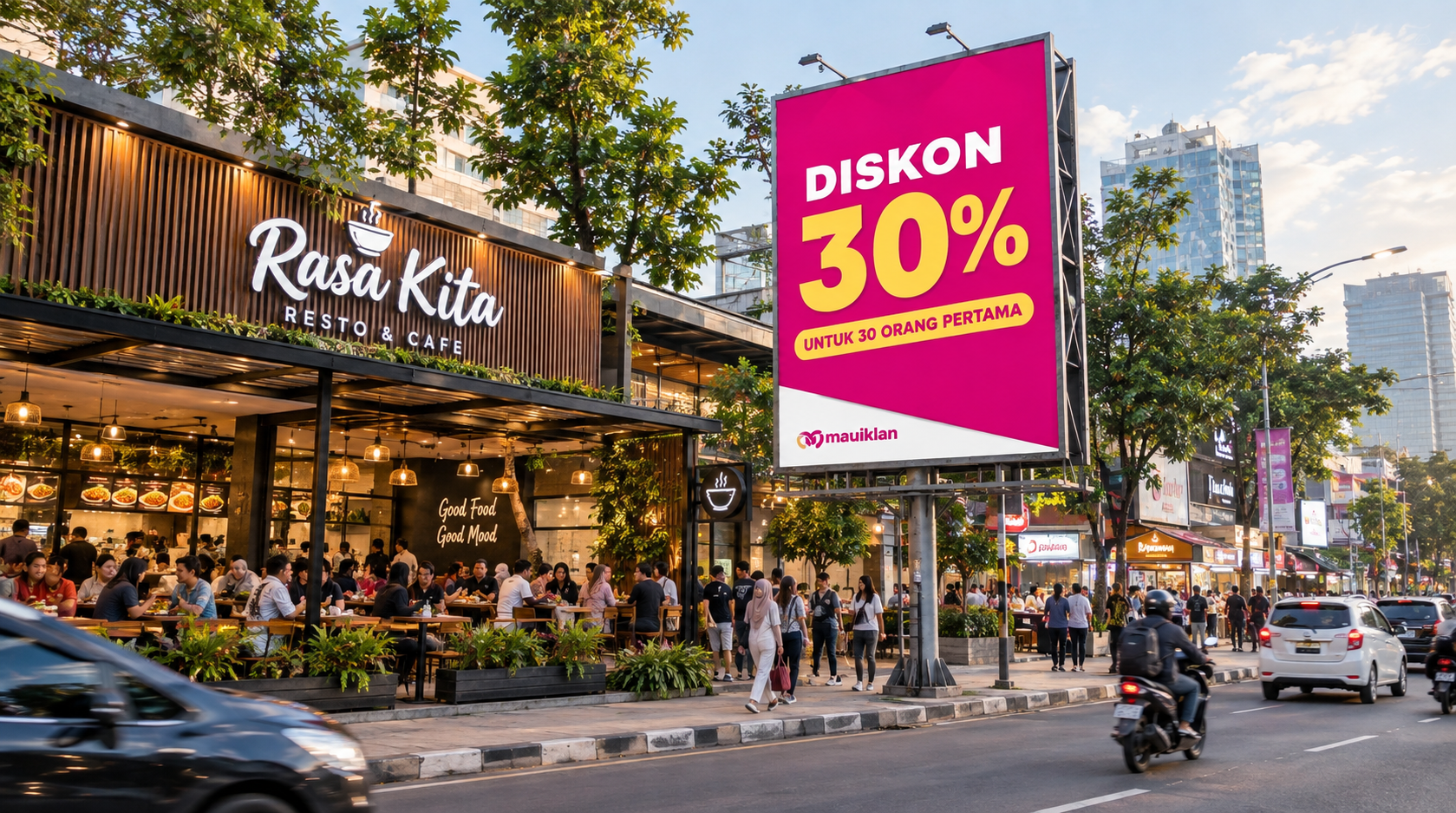
Amid increasingly competitive business conditions, advertising does not only serve to introduce products but also encourages consumers to make decisions quickly. One approach frequently used is FOMO (Fear of Missing Out), which refers to the concern that someone may miss an opportunity, experience, or benefit that other people are currently enjoying.
In advertising, FOMO can be an effective communication strategy because it taps into consumers' psychological desire not to be left behind. However, FOMO should be used responsibly so that it does not turn into misleading manipulation.
What Is FOMO in Advertising?
FOMO is a feeling of concern that someone may miss something considered important or interesting.
In advertising, this feeling can be created through messages such as:
- "Today's promotion only!"
- "Only 5 products left!"
- "Don't miss out!"
- "Thousands of people are already using this product."
- "Special price ends tonight."
Messages like these can make consumers feel concerned about losing an opportunity or being left behind from something they consider important or attractive.
Why Can FOMO Influence Consumer Decisions?
FOMO is related to the human desire to gain opportunities and avoid the feeling of being left behind.
When consumers see that a product is popular or that a promotion has a limited time, they may feel that they need to make a decision quickly.
Several FOMO triggers in advertising include:
Urgency
Messages that create the impression that consumers need to act immediately.
Scarcity
Information about limited product quantities or limited availability.
Social Proof
Showing that many people have purchased, used, or talked about a product.
Exclusivity
Creating the impression that a particular opportunity is only available to certain groups or customers.
Common FOMO Strategies Used in Advertising
FOMO can serve as a communication strategy that encourages consumers to consider a decision more quickly.
Some common advertising strategies include:
Limited Time Offer
This strategy places a time limit on an offer.
Example:
"Flash Sale ends at 11:59 PM."
This message creates a sense of time pressure, encouraging consumers to consider making a purchase sooner.
Limited Stock
Advertisements can display the amount of available stock to create a perception of scarcity.
Example:
"Only 10 products left."
If the information is accurate, consumers have a clear reason to make a decision sooner because the product may actually sell out.
Social Proof
Brands show that their products have been purchased or used by many people.
Example:
"Used by more than 10,000 customers."
Social proof can help build trust while making consumers feel that the product is already a popular choice.
Trends and Popularity
FOMO can also be created by connecting a product with a particular trend.
For example:
"The product going viral this week."
Consumers who want to follow current trends may feel encouraged to try the product so they do not feel left behind by their social environment.
Exclusive Access
Brands can provide special access to specific groups.
Example:
"Members get early access to purchase."
This strategy creates a sense of exclusivity while providing an additional reason for consumers to take action.
The Role of Social Media in Strengthening FOMO
Social media is an environment that can strongly support the emergence of FOMO. Consumers can continuously see products, activities, and experiences shared by other people.
For example, when a product goes viral on TikTok or Instagram, consumers may see many people creating content about it. Repeated exposure can increase curiosity and encourage others to try the product.
A simple example:
One person sees a product video → the video receives high engagement → more people see it → comments and content from other users appear → the product looks increasingly popular → other consumers become interested.
In this situation, advertising and user-generated content can reinforce each other's visibility.
FOMO and Emotional Advertising
FOMO essentially works by utilizing emotional aspects in the decision-making process.
An advertisement does not simply say:
"Our product costs Rp100,000."
It can instead be developed into:
"Don't miss the opportunity to get this product for Rp100,000 today only."
The difference lies in the emotional message. The second advertisement not only provides price information but also emphasizes the possibility of losing the opportunity.
For this reason, FOMO is often combined with emotional advertising to create messages that attract greater attention.
When FOMO Turns into Manipulation
FOMO does not automatically mean manipulation. Persuasion is a common part of marketing communication. Problems arise when fear of missing out is created through false or misleading information.
Examples include:
- Claiming that stock is almost sold out when there is actually plenty of stock available.
- Using countdown timers that are repeatedly reset without a clear reason.
- Claiming that an offer is the "final price" when the same price returns after the promotion ends.
- Using testimonials or customer numbers that cannot be verified.
- Making consumers feel that they must purchase even though important product information has not been provided.
Such strategies can cause consumers to make decisions based not on sufficient information but on intentionally created pressure.
How to Use FOMO Ethically
FOMO can be incorporated into an advertising strategy without misleading consumers.
Several principles can be applied:
Use accurate information
If stock is genuinely limited, communicate the actual quantity or situation.
Set a genuine deadline
Promotions with a deadline should have a clearly defined and genuine promotional period.
Provide complete product information
FOMO should support the advertising message rather than replace important product information.
Avoid excessive pressure
The purpose of advertising should be to encourage consumers to consider a product, not force them to make decisions without proper consideration.
Use social proof transparently
Customer numbers, ratings, reviews, or awards shown in advertisements should be verifiable.
Example of FOMO Implementation for a Brand
Suppose a brand wants to promote a digital marketing package.
Regular message:
"Digital Marketing Package starting from Rp1,000,000."
FOMO-based message:
"Digital Marketing Package promotion starting from Rp1,000,000. Promotional price valid until September 30."
This message provides information about the offer while also communicating a clear deadline.
If there is genuinely limited availability, the message can be developed into:
"Promotion starts from Rp1,000,000. Available for the first 20 businesses to register."
In this way, FOMO is based on an actual promotional condition.
FOMO as a Strategy to Increase Attention and Conversion
In advertising, consumer attention is an important stage before consumers consider a product.
FOMO can make advertising messages more attention-grabbing through elements such as:
- Scarcity
- Urgency
- Popularity
- Exclusivity
However, FOMO is not the only factor that determines purchasing decisions.
Consumers may still consider:
- Price
- Quality
- Needs
- Brand reputation
- Product benefits
- Previous experiences
Therefore, FOMO should be positioned as a supporting communication strategy rather than the only reason for a consumer to make a purchase.
Conclusion
FOMO (Fear of Missing Out) is a psychological phenomenon that can be incorporated into advertising strategies to create a sense of urgency, scarcity, popularity, and exclusivity.
Strategies such as limited-time offers, limited stock, social proof, trends, and exclusive access can make advertising messages more attention-grabbing and encourage consumers to consider a product.
However, there is an important distinction between persuasion and manipulation. Ethical FOMO should be based on accurate and transparent information and should not intentionally mislead consumers.
Ultimately, effective advertising is not only about making consumers afraid of missing an opportunity. It is also about providing clear reasons and sufficient information so that consumers can make informed decisions.
Mauiklan Helps Build Consumer Communication Through FOMO Strategies
Mauiklan provides digital marketing services to help businesses develop more effective communication and branding strategies, including:
- Digital Marketing
- Social Media Management
- Content Strategy
- SEO & Media Exposure
- Meta Ads & Google Ads
- Branding & Advertising
We help businesses increase visibility, build a professional image, and expand audience reach through effective digital strategies.
Build More Efficient Branding and Strategies with Mauiklan
In today's digital competition, building a brand image is not only about being recognized by many people. It is also about creating trust and building strong relationships with customers.
With the right branding strategy, personal branding and digital communication can become valuable assets for developing more effective and sustainable customer relationships.
Contact Mauiklan at +62 859-7422-7788 to build a more professional and impactful digital strategy.


 CS 1
CS 1